
Flexible vs. Rigid PCBs: Which One is perfect for Your Application?
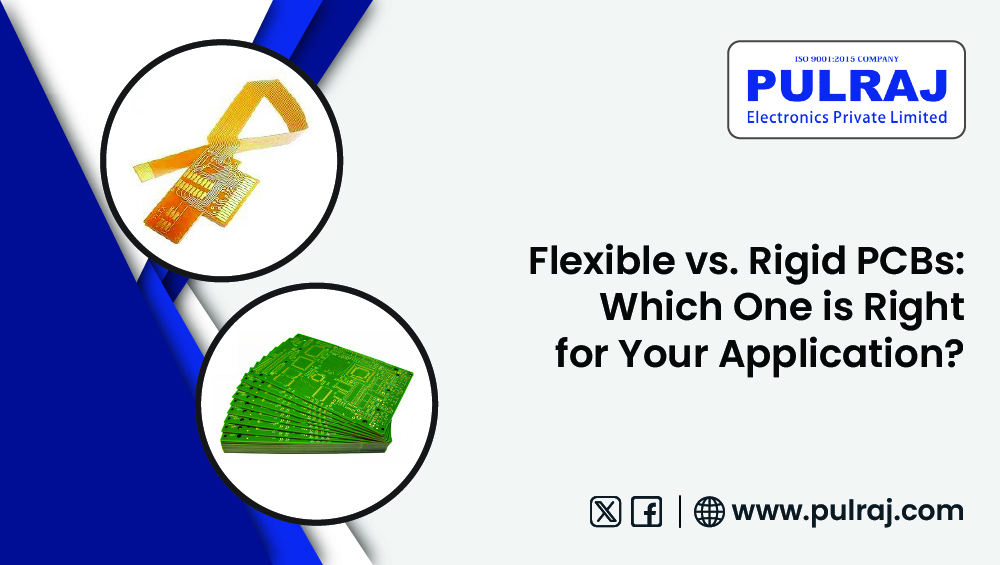
Printed Circuit Boards (PCBs) are the strength of modern electronic devices. Regardless, did you know there are different types of PCBs intended for different applications? At Pulraj Electronics Pvt. Ltd., we specialize in a wide range of PCB cures to help industries find the appropriate fit for their products.
In this blog, we’ll delve into the key opposites in relation to flexible vs rigid PCBs, their pros and cons, and how to decide on the accurate one for your application. Whether you're a design engineer, manufacturer, or procurement specialist, this PCB type comparison will help you make informed decisions.
What Are Rigid PCBs?
Definition
Rigid PCBs are the most common type of printed circuit boards. As the name suggests, they are solid and weak. Once manufactured, they cannot be flexed or reshaped.
Aspects of Rigid PCBs
- Assembled of solid substrate tools like fiberglass (FR4)
- Sturdy and durable
- Low manufacturing cost
- Typically used in simple to difficult electronic systems
Normal Applications
What Are Flexible PCBs?
Definition
Flexible PCBs, likewise known as flex PCBs, are erected from flexible plastic elements like polyimide. They can curve, fold, and twist without damaging the circuits.
Functions of Flex PCBs
- Lightweight and compact
- Can be bowed or folded into shapes
- Ideal for space-constrained applications
- Insufficiently more costly than rigid PCBs
Natural Applications
- Wearable devices (smartwatches, fitness bands)
- Smartphones and tablets
- Aerospace and defense systems
- Flexible solar panels and foldable displays
Flex PCB vs Rigid PCB: Side-by-Side Comparison
Here’s a swift PCB types comparison to help you understand the nuances more advanced:
| Feature | Rigid PCB | Flex PCB |
|---|---|---|
| Material | Fiberglass (FR4) | Polyimide or similar flexible film |
| Flexibility | Rigid and stiff | Bendable and twistable |
| Cost | Generally lower | Slightly higher |
| Durability | High in stable environments | High in dynamic/flexible use |
| Space-saving | Moderate | Excellent |
| Assembly complexity | Easier | More complex |
Choosing the Right PCB for Your Application
When deciding within flex PCB vs rigid PCB, consider the following factors:
-
Design Conditions
If your device needs a quick or 3D design layout, flexible PCBs are ideal. For flat, sturdy designs, go with rigid PCBs.
-
Movement and Flexibility
Devices that involve movement, folding, or vibration (like wearables or military equipment) are possible from flexible PCBs. Rigid PCBs are improved for stationary components.
-
Surroundings and Durability
Both types are durable, but if your application involves severe environments or uninterrupted movement, a flex PCB is an improved fit.
-
Budget
Rigid PCBs are more cost-useful for vast-volume production, while flex PCBs may cost more although offer refined functionality for clear use cases.
Pulraj Electronics – Your Trusted PCB Partner
At Pulraj Electronics Pvt. Ltd., we provide custom methods in both flexible and rigid PCBs. Our team works closely with clients from different industries—automotive, aerospace, medical, consumer electronics—to design and deliver PCBs that meet performance, durability, and cost limit expectations.
We substitute small prototypes to full-scale manufacturing with hurried turnaround and experienced individual technical substitute. If you're unsure whether a flex PCB vs rigid PCB is the right choice for your product, our team is here to help.
FAQs
1. What is the essential difference relative to flexible and rigid PCBs?
The prime difference lies in their framework. Flexible PCBs can turn and twist, while rigid PCBs remain solid and fixed in shape.
2. Are flex PCBs more lavish than rigid ones?
Yes, typically flex PCBs are more high-priced due to the matter and depth manufacturing approach, although they offer refined design flexibility and space skill.
3. Can I use a combination of both PCB types?
Entirely. There are hybrid boards called rigid-flex PCBs that assemble the benefits of both types. These are geat for elaborate and quick electronic systems.
4. Which industries use flexible PCBs the most?
Industries like wearable tech, aerospace, medical devices, and consumer electronics often use flexible PCBs due to their lightweight and concise nature.
Final Conclusion
Choosing the right PCB type depends on your product’s design, usage, and expense limit. With this clear PCB types comparison, you’re improved equipped to decide among flexible vs rigid PCBs.
At Pulraj Electronics Pvt. Ltd., we don’t just sell PCBs—we offer smart, constructed options tailored to your business. Ready to initiate your project? Connection us today to speak with our PCB experts and get a custom quote.