
PCB Electronic Components: Necessary Parts and Their Functions
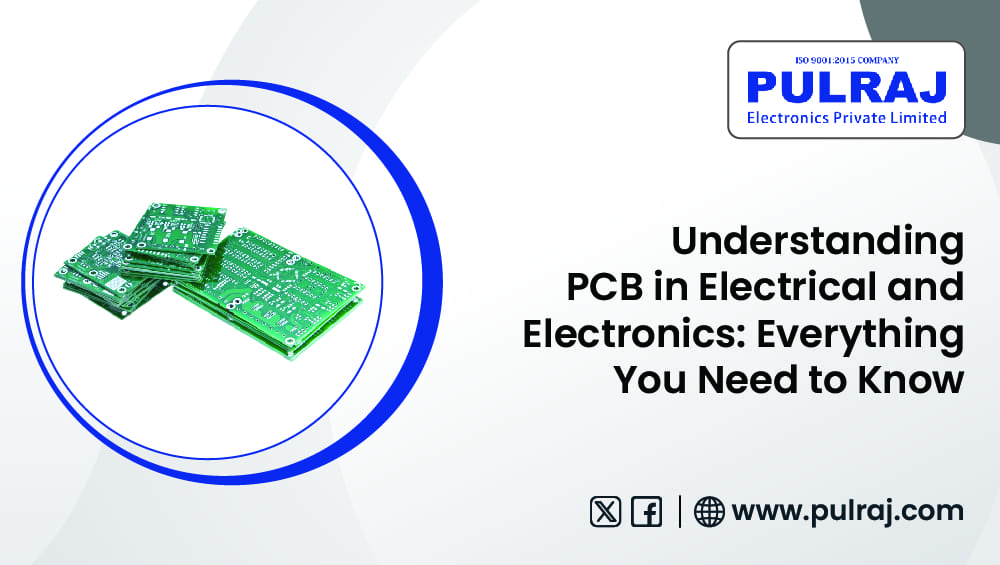
Printed Circuit Boards (PCBs) are the backbone of all electronic devices, from mobile phones and smartwatches to medical machines and industrial digitization systems. On the other hand, what makes these boards work? The answer lies in the small, however powerful, parts known as PCB electronic components.
At Pulraj Electronics Pvt. Ltd., we specialize in designing and assembling high-quality PCBs in ISO 9001:2015-validated, ESD-safe, and dust-free environments using advanced tools like Automatic Optical Inspection (AOI) machines. In this article, we'll walk you through the important components used on PCBs, their functions, and why they matter.
What Are PCB Electronic Components?
PCB electronic components are the tiny electronic parts mounted on a PCB to assemble a working circuit. These components perform definite functions such as signal transmission, skill control, or data processing.
They come in two crucial types:
- Through-Hole Components: Inserted into drilled holes & soldered on the other side of the PCB.
- SMD Electronic Components: Smaller components that are mounted directly onto the surface of the PCB.
Both types have their advantages, and we build on both design needs and customer preferences.
Key SMD and PCB Electronic Components and Their Functions
Let’s take a closer look at the most commonly used components in modern electronic PCBs
1. Resistors
Resistors control the flow of electrical current. They are used to reduce voltage or limit current to additional components.
Function: They protect delicate components and help divide voltage in circuits.
2. Capacitors
Capacitors store and release electrical energy. They come in various sizes and assets depending on their use.
Function: Filtering noise, aligning voltage, and smoothing the master supply.
3. Diodes
A diode allows current to flow in one direction only. The most casual type is the LED (Light Emitting Diode).
Function: Protects circuits from reverse voltage and helps in signal routing.
4. Transistors
Transistors work like electronic switches or amplifiers. They are vital for signal processing and control.
Function: Intensifying signals and switching electronic indicators in devices like mobile phones and computers
5. Unified Circuits (ICs)
ICs are miniaturized circuits with many components sealed into a small chip.
Function: Performing detailed functions like processing, controlling, or memory storage. They are the mentality of most electronic systems.
6. Inductors
Inductors store power in a magnetic field when electrical current flows through them.
Function: Used in filtering, tuning, and capacity storage, predominantly in ability supplies.
7. Crystals and Oscillators
These components generate particular frequencies used for timing hops.
Function: Necessary for clocks in microcontrollers, communication devices, and computers.
8. Connectors and Terminals
Connectors allow different boards or devices to connect and communicate with particular others.
Function: Used for strength input, signal switch, or peripheral device connection.
Why SMD Electronic Components Are Earning Popularity
SMD electronic components are the preferred choice in most modern PCB designs. Here's why:
- Smaller Size: Ideal for abbreviated electronics like wearables or smartphones
- Faster Session: Self-driven placement reduces production time
- Finer Performance: Lower resistance and inductance at connection points
- Cost-Effective: Well-suited for mass production with minimal errors
Our high-speed decide-on-and-place machines and AOI testing confirm the whole SMD element is positioned and soldered for superior performance.
Applications of PCB Electronic Components
These components are used in almost the entire industry, including:
- Automotive electronics (control modules, sensors)
- Consumer electronics (mobiles, TVs, smart appliances)
- Medical devices (monitors, diagnostic machines)
- Industrial control systems (PLC, HMI units)
- Telecommunication hardware (routers, modems, switches)
Our flexible manufacturing procedure encourages both low-volume prototypes and significant orders across all these sectors.
Why Make a Choice of Pulraj Electronics Pvt. Ltd. for PCB Session?
- ISO 9001:2015 Approved
- Dust-free, ESD-safe setting
- Sophisticated testing using AOI machines
- Custom PCB design and meeting
- Quick lead times and reliable reserve
We don’t just bring together PCBs—we deliver performance, truthfulness, and peace of mind
Perception of PCB electronic components is vital when designing reliable electronic products. Whether you're creating a smart device, medical equipment, or industrial equipment, choosing the faultless components—and the valid manufacturing partner—makes all the difference.
Pulraj Electronics Pvt. Ltd. delivers valid-built PCBs with the faultless combination of SMD and through-hole components, produced in world-class facilities. Let us help you transport your product to life with the quality and speed your business needs.
Get in touch with us today for your PCB gathering needs
FAQs
1. What’s the difference in relation to SMD and through-hole components?
SMD components are mounted directly on the PCB surface and are smaller, while through-hole components are inserted into drilled holes. SMDs are faster and higher quality, suited for high-speed production.
2. Can I customize which components go on my PCB?
Yes. At Pulraj Electronics Pvt. Ltd., we work with your BOM (Bill of Components) and design files to confirm that the accurate components you need are sourced and grouped.
3. Are complete electronic components safe from static damage?
No. Many components are static-delicate, which is why we use ESD-safe protocols throughout our production routine to protect your boards.
4. How do I know if my PCB components are properly placed & soldered?
We use Automated Optical Inspection (AOI) machines to inspect all PCBs for placement genuineness, solder joints, & defects.